Categoria: Washing Machine

  • Washing Machine Not Draining? 10 Causes and How to Fix It

    Washing Machine Not Draining? 10 Causes and How to Fix It

    Is your washing machine not draining? Learn 10 common causes and simple ways to get your washer draining again.


    Finding a tub full of water at the end of a wash cycle is frustrating, especially when you have a pile of laundry waiting.

    If your washing machine is not draining, don’t panic. A washer that won’t drain doesn’t necessarily mean you need a new machine. In many cases, the problem is something relatively simple, such as a kinked drain hose, clogged filter, blocked drain pump, or a problem with the household drain.

    The good news is that you can check several of the most common causes yourself before calling a repair technician.

    In this guide, we’ll walk through 10 common reasons a washing machine won’t drain, what you can safely check, and when it’s better to stop troubleshooting and call a professional.

    Quick answer: The most common causes of a washing machine not draining include a clogged or kinked drain hose, blocked pump filter, clogged drain pump, incorrect drain hose installation, a blocked household drain, excessive detergent or suds, and certain mechanical or electrical problems.

    Before You Start: A Quick Safety Check

    If there is still water inside the washer, take a moment before opening anything.

    Unplug the washing machine before inspecting or cleaning components, particularly anything around the drain pump or filter.

    If the water is hot, allow it to cool before attempting to drain it manually.

    Also, keep towels and a shallow container nearby. A surprising amount of water can come out of a washer that has stopped before the drain cycle.

    And one important point: not every washing machine has an accessible drain pump filter. Filter locations and procedures vary considerably between models, so check your owner’s manual before removing a filter or opening an access panel.


    Why Is My Washing Machine Not Draining?

    A washing machine removes water through a combination of the drain system, drain hose, and pump. Depending on the model, there may also be a drain pump filter designed to catch lint, coins, hair, and other small objects before they reach the pump.

    If any of these components become blocked, restricted, incorrectly installed, or damaged, the washer may not be able to remove the water properly.

    Here are the most common things to check.


    10 Reasons Your Washing Machine Isn’t Draining

    1. The Drain Hose Is Kinked or Crushed

    One of the easiest things to check is the drain hose behind the washing machine.

    If the washer has been moved recently, the hose may have become bent, crushed, or kinked between the machine and the wall.

    Even a partial restriction can reduce the amount of water that can flow out of the washer.

    What to do

    Carefully pull the washer forward if necessary and inspect the entire drain hose.

    Look for:

    • Sharp bends
    • Kinks
    • Crushed sections
    • Visible blockages
    • A hose trapped underneath the washer

    Straighten any obvious kinks and make sure the hose has enough room to allow water to flow freely.

    Manufacturers including LG, Samsung, and Whirlpool specifically recommend checking the drain hose for kinks or blockages when a washer won’t drain.


    2. The Drain Hose Is Clogged

    A hose can look perfectly fine from the outside and still have a blockage inside.

    Lint, dirt, small objects, and other debris can restrict the flow of wastewater.

    If the washer drains very slowly rather than not draining at all, a partially blocked hose is worth investigating.

    What to do

    First, unplug the washer.

    Then follow the instructions in your owner’s manual for accessing and disconnecting the drain hose.

    Don’t force connections or dismantle parts that your particular model doesn’t identify as user-serviceable.

    If you’re uncomfortable removing the hose, a technician can inspect it safely.


    3. The Pump Filter Is Clogged

    This is another very common reason for a washing machine not draining.

    Many front-load washers have a drain pump filter designed to catch things that shouldn’t make it into the pump, such as lint, coins, hair, and small objects left in pockets.

    Over time, that filter can become clogged.

    A blocked filter can cause slow or incomplete draining, leave clothes soaking wet, extend cycle times, or cause the washer to make unusual noises.

    How to check the pump filter

    If your washing machine has an accessible pump filter:

    1. Turn the washer off and unplug it.
    2. Locate the filter access area according to your owner’s manual.
    3. Place towels and a shallow container underneath.
    4. Drain any remaining water using the emergency drain tube if your model has one.
    5. Carefully remove the filter.
    6. Remove lint, hair, coins, and other debris.
    7. Rinse the filter thoroughly.
    8. Check the filter opening for additional debris.
    9. Reinstall the filter securely.
    10. Run an appropriate drain or rinse cycle to test the washer.

    Important: Don’t assume every washing machine has a removable filter. Some models don’t have one, while others have filters that aren’t designed for consumer access.


    4. The Drain Pump Is Blocked

    The drain pump is responsible for moving wastewater out of the washing machine.

    If something gets into the pump, it can prevent the pump from moving water properly.

    Common objects found in washer drainage systems can include:

    • Coins
    • Hair
    • Lint
    • Small pieces of fabric
    • Paper
    • Other objects accidentally left in pockets

    If the pump is blocked, you may hear the machine humming or attempting to drain without actually removing the water.

    What should you do?

    If your model provides access to the pump or pump filter, follow the manufacturer’s instructions.

    Don’t reach into an unknown pump assembly or attempt to disassemble electrical components while the appliance is connected to power.

    If clearing the accessible filter and checking the hose doesn’t solve the problem, the pump itself may need professional inspection.


    5. The Household Drain Is Blocked

    Sometimes the washing machine isn’t actually the problem.

    The drain that the washer empties into may be partially or completely blocked.

    This is particularly likely if you notice water backing up around the drain or the laundry sink.

    A simple test

    If your washing machine drains into a laundry sink, check whether the sink itself drains normally.

    If the sink or standpipe is slow, backing up, or overflowing when the washer attempts to drain, the household plumbing may need attention.

    A washer cannot drain properly if the wastewater has nowhere to go.


    6. The Drain Hose Is Installed at the Wrong Height

    Drain hose installation matters more than many people realize.

    The hose must be positioned according to the requirements of your specific washing machine.

    If it is installed too high, too low, pushed too far into the standpipe, or sealed incorrectly, drainage can be affected.

    Some installations can also create siphoning problems.

    For example, Whirlpool notes that the drain hose should not be pushed too far into the drainpipe and that the drainpipe and hose must meet specific installation requirements.

    Samsung likewise advises checking the hose height and installation when a washer isn’t draining.

    What should you do?

    Check the installation instructions for your exact model.

    Don’t rely on a generic measurement you found online because drain requirements can differ between manufacturers and models.


    7. Too Much Detergent Is Creating Excessive Suds

    Believe it or not, using too much detergent can contribute to drainage and cycle problems.

    Excessive suds can interfere with normal washer operation and may cause the machine to extend the cycle or have difficulty completing certain stages.

    This is particularly relevant when using high-efficiency (HE) washers, which are designed to use much less water than older machines.

    What to do

    Always follow the detergent manufacturer’s recommended amount and your washing machine manufacturer’s instructions.

    More detergent doesn’t necessarily mean cleaner clothes.

    In fact, too much can create unnecessary suds and residue.

    Whirlpool specifically recommends measuring detergent and following the manufacturer’s directions.


    8. The Washer Is Unbalanced or the Load Is Too Large

    Sometimes the problem isn’t a blockage at all.

    An overloaded or badly unbalanced load can cause a washer to change or extend its cycle.

    For example, a heavy blanket or several large towels can become concentrated on one side of the drum.

    Modern washing machines are designed to detect certain imbalance conditions and may adjust the cycle rather than continuing normally.

    Try this

    If the washer stopped with water inside:

    1. Turn the machine off.
    2. Wait for the door or lid to unlock if necessary.
    3. Redistribute the clothing evenly.
    4. Remove some items if the load is very large.
    5. Select an appropriate drain or spin cycle.

    If the washer still won’t drain, continue troubleshooting the drainage system.


    9. The Lid or Door Switch May Be Preventing the Cycle From Completing

    Top-load and front-load washing machines use different safety systems.

    On some top-load models, the washer may not continue certain parts of the cycle if the lid isn’t properly closed.

    A problem with the lid switch or another safety component can therefore affect the washer’s operation.

    If your machine repeatedly stops before draining or spinning even though the drain hose and filter appear clear, a faulty switch or sensor may be involved.

    This is one of the situations where your owner’s manual and model-specific troubleshooting information become especially important.

    If you’re not comfortable testing electrical components, it’s best to have the washer inspected by a qualified technician.


    10. The Drain Pump or Another Internal Component Has Failed

    If you’ve checked the obvious causes and your washing machine is still not draining, there may be a mechanical or electrical problem.

    Possible issues can include:

    • A failed drain pump
    • Damaged wiring
    • A faulty switch or sensor
    • A control board problem
    • A damaged internal component

    At this point, continuing to disassemble the appliance yourself may create more problems than it solves.

    If the washer makes unusual electrical noises, smells like burning, trips a circuit breaker, or shows a persistent error code, stop using it and seek professional assistance.


    How to Fix a Washing Machine That Won’t Drain

    If you’re standing in front of a washer full of water right now, don’t start taking the machine apart.

    Work through these checks in order.

    Step 1: Turn the washer off

    Unplug the washing machine before inspecting any components.

    Step 2: Check the drain hose

    Look behind the washer for kinks, crushing, or obvious restrictions.

    Step 3: Check the household drain

    Make sure the standpipe, laundry sink, or other drainage point isn’t blocked.

    Step 4: Check the pump filter

    If your model has an accessible drain pump filter, inspect and clean it according to the owner’s manual.

    Step 5: Look for obvious debris

    Check accessible areas for coins, lint, hair, or other objects that could be interfering with drainage.

    Step 6: Check the installation

    Make sure the drain hose is positioned according to the manufacturer’s installation requirements.

    Step 7: Test a drain or spin cycle

    Once you’ve completed the appropriate checks, run the washer’s drain/spin or rinse/spin program, depending on the model.

    If water still doesn’t leave the drum, you may be dealing with a pump, electrical, or other internal problem.


    How to Drain a Washing Machine Full of Water

    If your washer is completely full of water, you may need to remove the water before you can troubleshoot the problem.

    The exact procedure depends on the model.

    Some front-load machines have a small emergency drain hose located near the drain pump filter. Other machines use a different procedure.

    If your machine has an emergency drain hose

    Generally:

    1. Unplug the washing machine.
    2. Locate the emergency drain area according to the owner’s manual.
    3. Place a shallow container underneath.
    4. Open the emergency drain hose carefully.
    5. Allow the water to drain into the container.
    6. Empty the container as needed.
    7. Continue until the water has been removed.
    8. Replace the hose cap securely.
    9. Inspect the pump filter if your model has one.

    Samsung and Whirlpool both describe using a shallow container and towels when draining residual water from models equipped with an accessible emergency drain system.

    Don’t remove a pump filter without preparing for water to come out. If the drum is full, there may be a significant amount of water behind the filter.


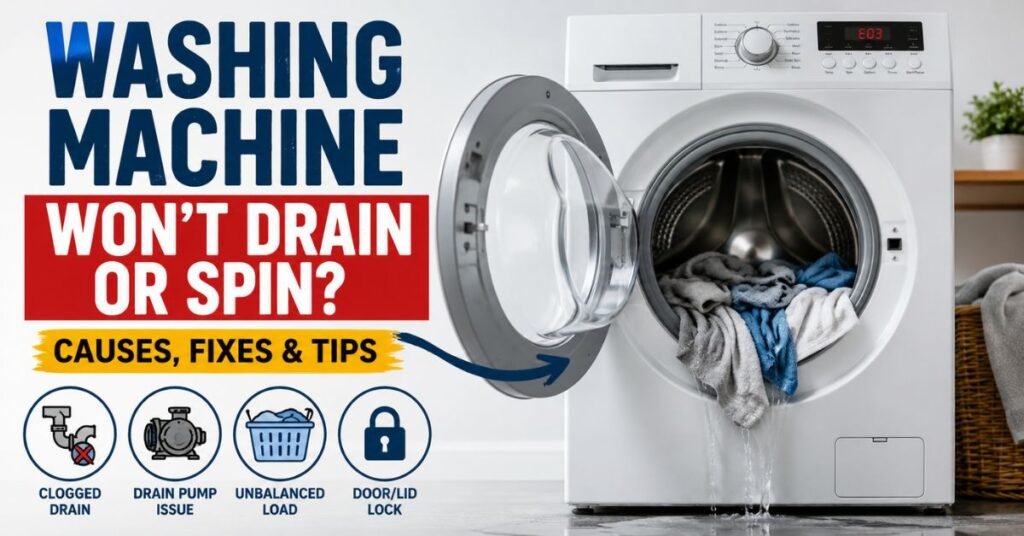
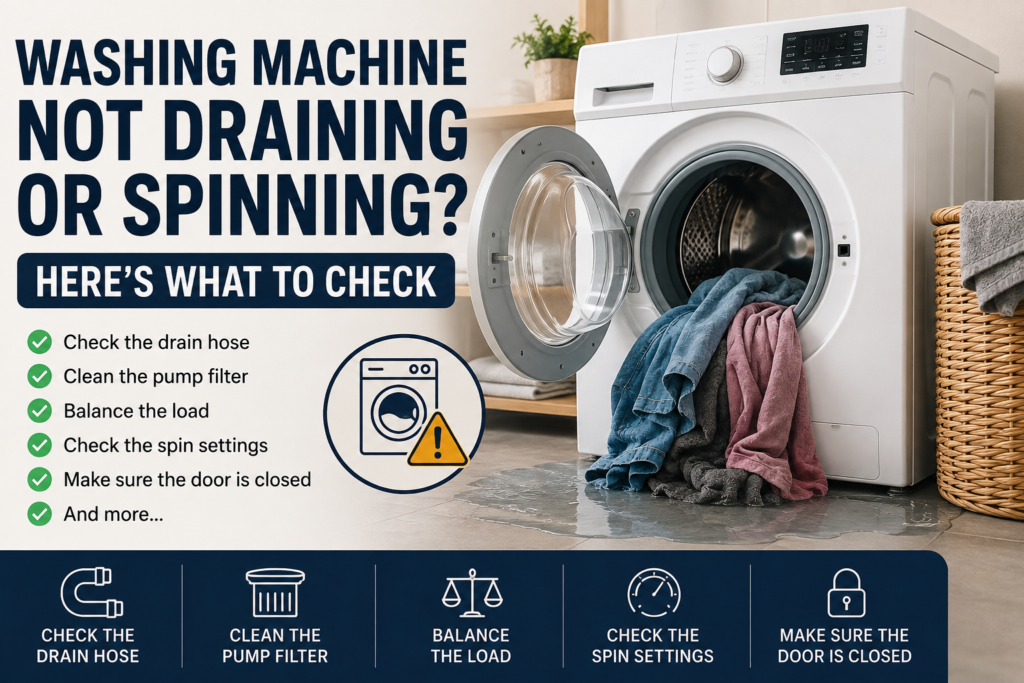
    Washing Machine Not Draining or Spinning?

    If your washing machine is not draining or spinning, the two symptoms may be connected.

    A washer may not move into the spin portion of the cycle correctly if it hasn’t successfully drained the water first.

    Start with the drainage checks:

    • Drain hose
    • Pump filter
    • Drain pump
    • Household drain
    • Hose installation
    • Load balance

    If the washer still refuses to drain or spin after these checks, consult the troubleshooting section for your exact model.


    Washing Machine Won’t Drain but Makes a Humming Noise

    A humming sound can sometimes mean the washer is attempting to operate the drain pump but water isn’t moving out.

    A blockage around the drain pump, filter, or hose is one possibility.

    However, sound alone isn’t enough to diagnose the problem.

    If the hose and accessible filter are clear and the washer continues humming without draining, the drain pump may need further inspection.

    Avoid repeatedly running the washer if you suspect the pump is blocked or damaged.


    Washing Machine Drains Slowly but Doesn’t Stop Completely

    Slow draining is worth addressing before the washer stops draining altogether.

    Common things to check include:

    • Partially blocked drain hose
    • Dirty pump filter
    • Restricted household drain
    • Incorrect drain hose installation
    • Debris around the pump

    A washer that takes increasingly longer to drain may be giving you an early warning that something in the drainage system needs attention.


    When Should You Call a Washing Machine Repair Technician?

    You don’t necessarily need professional help for a kinked hose or accessible clogged filter.

    But some problems are better left to a qualified appliance technician.

    Consider calling for professional service if:

    • The washer still won’t drain after basic checks.
    • The drain pump appears to be damaged.
    • You smell burning.
    • The machine repeatedly trips the circuit breaker.
    • There are exposed or damaged wires.
    • The washer displays a persistent error code.
    • You need to disassemble electrical or mechanical components.
    • You aren’t comfortable working around the appliance.

    If the washer is under warranty, check the warranty terms before attempting repairs yourself.


    Frequently Asked Questions

    Why is my washing machine not draining?

    The most common causes include a kinked or blocked drain hose, clogged pump filter, blocked drain pump, restricted household drain, incorrect hose installation, excessive suds, or an internal component problem.

    How do I fix a washing machine that won’t drain?

    Start by turning off and unplugging the washer. Check the drain hose for kinks or blockages, inspect the household drain, and clean the pump filter if your model has an accessible filter. If the washer still won’t drain, professional diagnosis may be necessary.

    Why is my washing machine full of water?

    If the washer finishes a cycle with water still inside, it may not have been able to complete the drainage process. Check the drain hose, pump filter, drain pump, and household drain.

    Can a clogged filter stop a washing machine from draining?

    Yes. On models equipped with an accessible drain pump filter, accumulated lint, hair, coins, and other debris can restrict water flow and interfere with drainage.

    Why is my washing machine not draining or spinning?

    Some washers won’t proceed normally to the spin portion of a cycle if water hasn’t drained. Check the drainage system first, including the hose, pump filter, and drain pump.

    How do I manually drain my washing machine?

    The procedure depends on the model. Some front-load washers have an emergency drain hose near the pump filter, while other machines require a different procedure. Always follow the instructions for your specific model.

    How do I know if my washing machine drain pump is bad?

    A washer that continues to fail to drain after the hose and accessible filter have been checked may have a problem with the drain pump. However, symptoms can overlap with other issues, so proper diagnosis is recommended before replacing the pump.

    Can too much detergent cause drainage problems?

    Excessive detergent can create too many suds and interfere with normal washing cycles. Always use the amount recommended for your detergent and washing machine.

    Is it safe to use a washing machine that won’t drain?

    It’s better not to keep running the machine repeatedly when it has a persistent drainage problem. Turn it off and unplug it before inspecting the drainage system. If you notice burning smells, electrical problems, or unusual behavior, contact a qualified technician.


    Final Thoughts

    A washing machine not draining can look like a major appliance failure, but the cause is often something much simpler.

    Start with the easiest checks: inspect the drain hose, make sure the household drain isn’t blocked, and check the pump filter if your particular washer has an accessible one.

    If those checks don’t solve the problem, the drain pump or another internal component may need professional attention.

    Most importantly, don’t force anything or disassemble components that aren’t intended for user service. Washing machines vary significantly by brand and model, so your owner’s manual should always take priority over generic instructions.

    With a few basic checks, you may be able to identify the problem before paying for an unnecessary repair.


    Related Articles

    Washing Machine Not Draining or Spinning? Here’s What to Check

    How to Drain a Washing Machine Full of Water

    How to Clean a Washing Machine Drain Pump Filter

    Why Is My Washing Machine Making a Humming Noise but Not Draining?

    Why Does My Washing Machine Stop Before the Drain Cycle?


    Editorial Note: Troubleshooting procedures vary by washing machine brand and model. Always follow the safety and maintenance instructions provided by the manufacturer for your specific appliance.